 CAD
CAD
 USD
USD

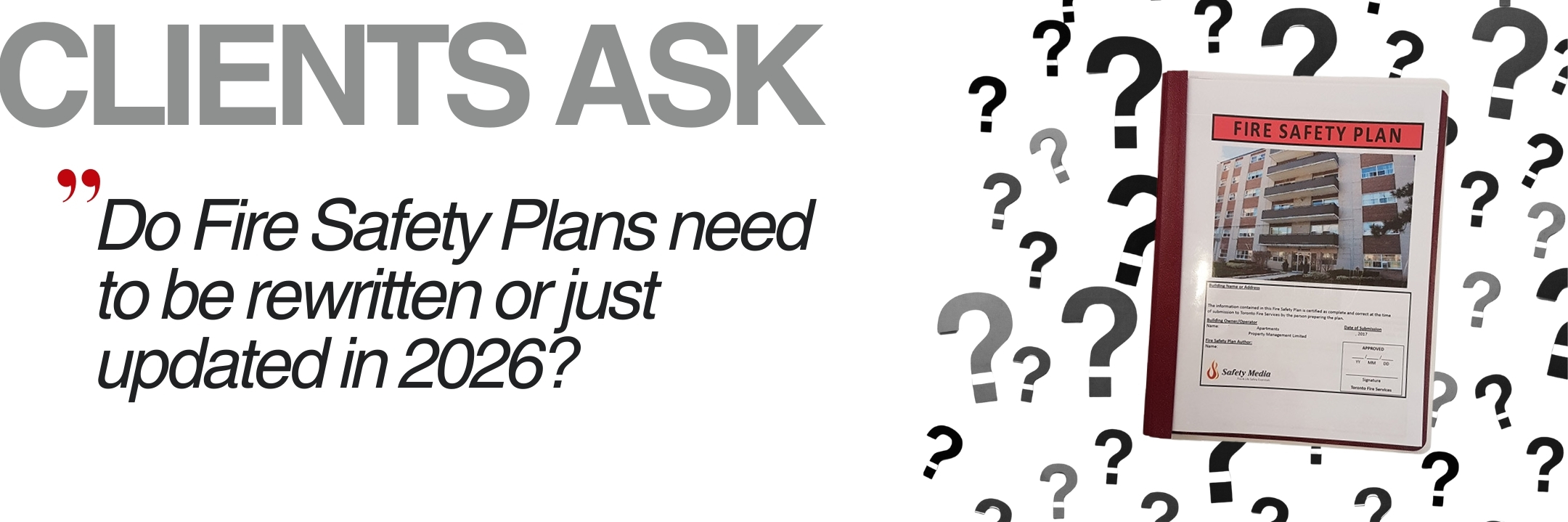
Clients Ask: Do Fire Safety Plans need to be rewritten or just updated in 2026?
Posted by Safety Media Inc on 2026 Jan 15th
We are launching a new newsletter series answering the most common questions we hear from our customers about fire and life safety and compliance.
One of the questions we’ve been asked most often since the 2026 Ontario Fire Code updates is:
“Do Fire Safety Plans need to be rewritten because of the Fire Code changes, or just updated?”
While Fire Safety Plans are required to be reviewed annually, the January 1, 2026 Fire Code update makes this year’s review particularly critical. The 2026 Fire Code introduces significant changes that directly affect how fire and life safety systems are inspected, tested, documented, and managed. Depending on your building, the following updates may apply:
- Exit doors and locking systems. All exit doors in buildings must comply with Ontario Fire Code standards for locking, latching, and fastening. Locking mechanisms must either be approved by the Chief Fire Official or incorporate a simple release that allows the door to be readily opened from the inside. Additionally, electromagnetic locking devices must meet the requirements of the Building Code or receive approval from the Chief Fire Official to ensure safe and compliant egress.
- Fire alarm inspections and reporting. As of January 1, 2026, Ontario will align with national standards ULC-S536 and ULC-S537 for fire alarm inspection and verification. Inspection and test reports must follow prescribed formats and include more detailed records. Monthly and annual inspections must use approved forms, and battery testing now requires performance or load testing, not just a voltage reading. Any deficiencies must be clearly identified and recorded separately to create actionable follow-up items, while inspection logs must include full attendance details, including the names of personnel, dates, and times.
- Testing of modern life safety systems. Newer technologies, including voice evacuation systems, wireless carbon monoxide detection, and integrated fire and life safety systems must now be incorporated into routine inspection and testing programs. Where systems are integrated, testing must comply with CAN/ULC-S1001, and monitored fire alarm systems require confirmation of compliance with NFPA 71 or CAN/ULC-S561 standards.
- Expanded carbon monoxide (CO) alarm requirements. Buildings heated by forced-air fuel-burning appliances must comply with new carbon monoxide alarm placement rules effective January 1, 2026. CO alarms are required outside each sleeping area in affected units, on every storey without a sleeping area, in the appliance service room, and in public corridors heated by the appliance, spaced no more than 25 metres apart.
- Stronger enforcement and penalties. Municipalities will be able to issue Administrative Monetary Penalties (AMPs), with fines applying to owners, corporations, and other responsible parties. [OAFC]
A Fire Safety Plan must be kept current and updated whenever there are changes to the building, occupancy, fire hazards, emergency contacts, or fire wardens, as well as updates driven by Fire Code change.
Safety Media helps building owners and operators navigate the 2026 Fire Code changes from start to finish. Whether a targeted update or a full rewrite is required, we assess the scope, complete the necessary revisions, and manage the entire process — including submission to the local Fire Department for review and approval.